

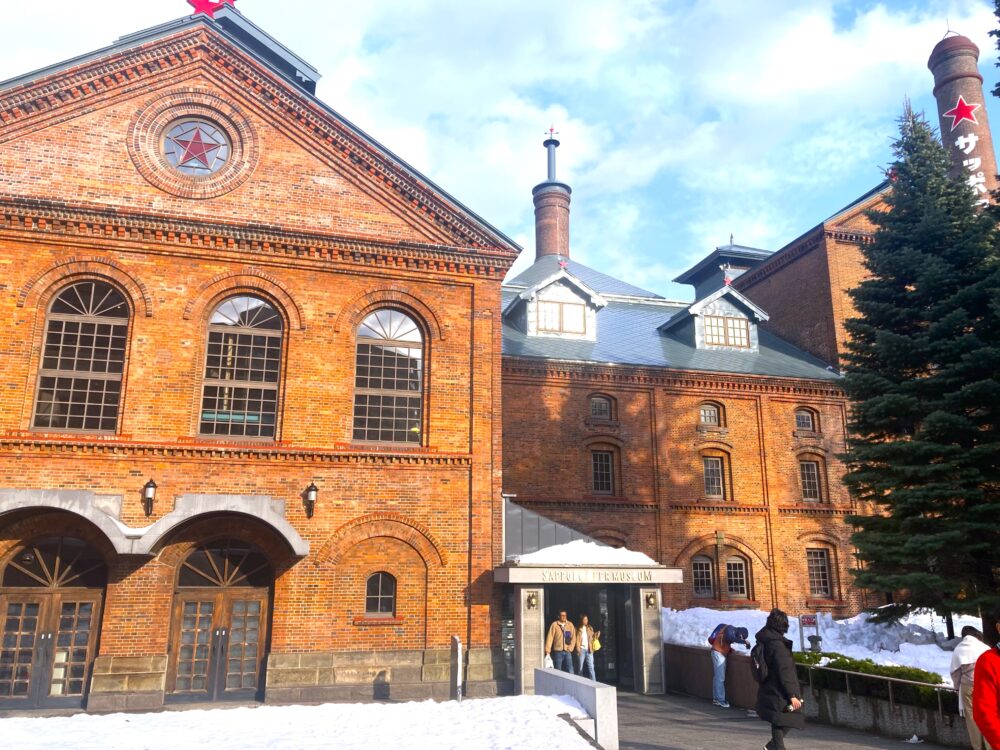
A stately red-brick building standing out against Sapporo’s blue sky.
Often called a sacred place for beer lovers, the Sapporo Beer Museum is one of the must-visit attractions in Sapporo. Here, you can explore the passion behind Hokkaido’s development and the origins of beer brewing in Japan—all in one place.
The Beauty of Historic Red-Brick Architecture
One of the museum’s greatest attractions is the building itself.
Originally built in 1890 as a sugar factory, this red-brick structure later served for many years as a malting factory, where malt—the key ingredient for beer—was produced.
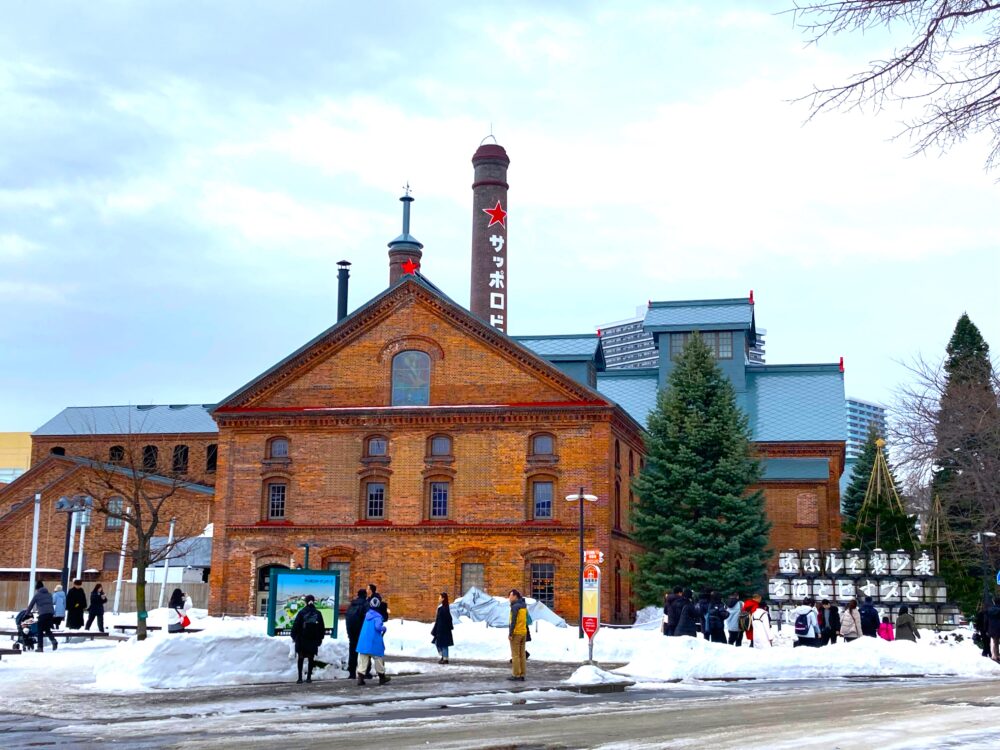
The towering chimney and the iconic red star, known as the “Goryo Star,” transport visitors back to the nostalgic atmosphere of the Meiji era.
Today, the building is officially recognized as a Hokkaido Heritage site. In the past, it was even considered for designation as a National Important Cultural Property by Japan’s Agency for Cultural Affairs. Although the offer was declined due to renovation restrictions, the building remains highly valuable from a cultural and historical perspective.
Beer Tastes Better After You Learn the Story
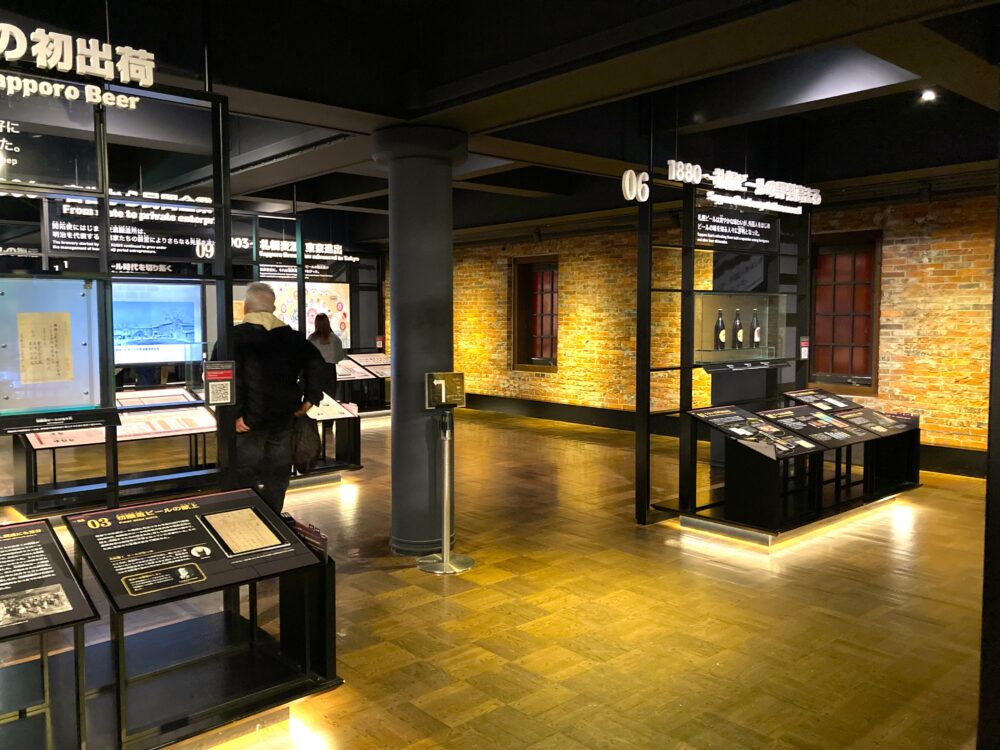
Many visitors come to this area for jingisukan (Hokkaido-style lamb barbecue) at the neighboring Sapporo Beer Garden. But before that, take some time to explore the museum.
Learning the history behind Sapporo Beer makes that first glass afterward feel deeper and more meaningful.
For the best experience, we highly recommend the Premium Guided Tour (paid).
Tour participants gain access to the exclusive Premium Theater, where you’ll learn how early pioneers overcame countless challenges to create Japan’s first beer.
Learn more → Premium Tour on the official website
The Only Place to Try the Legendary Reissue Beer “Sapporo Kaitakushi Beer”
The highlight of the tour comes at the end: beer tasting time.
The star of the show is the museum-exclusive “Sapporo Kaitakushi Beer.”
This beer faithfully recreates the original recipe from the days of the Kaitakushi Brewery, the birthplace of Sapporo Beer. Since advanced filtration technology did not exist at the time, the beer intentionally retains yeast, giving it a slightly cloudy appearance in the glass.
And the taste? Surprisingly rich and bold.
Compared to the clean and refined Sapporo Black Label, this reissue beer has a fuller body and deeper flavor. Honestly, I found myself thinking, “I might actually prefer the reissue!”
Because this beer contains living yeast, its flavor changes over time. Freshness is everything—which is exactly why it can only be enjoyed here. Don’t miss the chance to taste this living piece of history, born from the passion of the early pioneers.
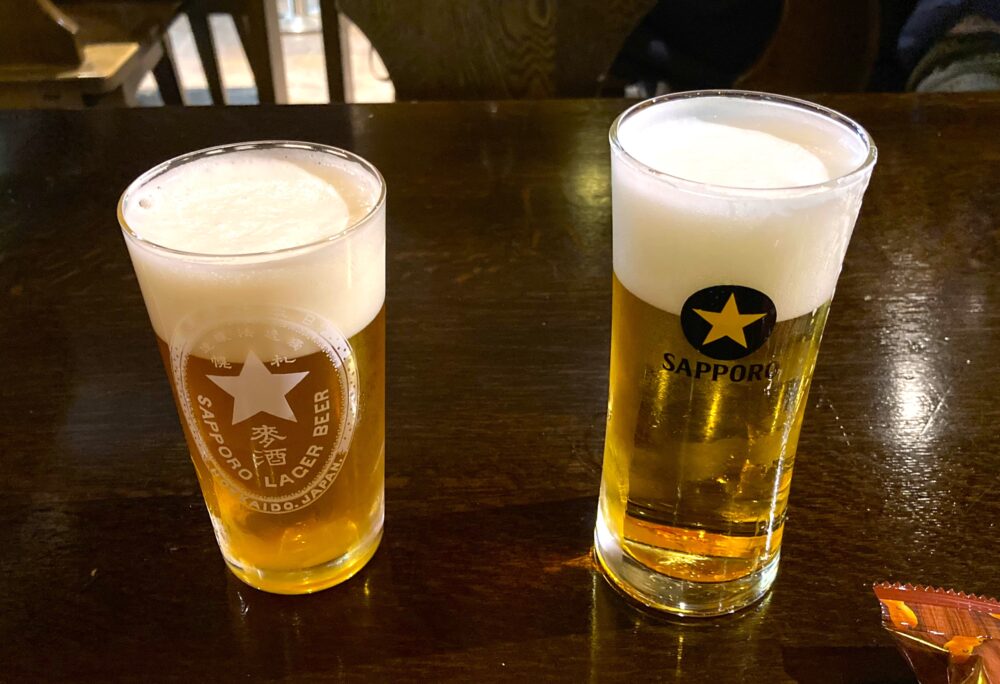
As a nice bonus, a small snack is also included—perfect for enjoying both beers even more.
How Sapporo Beer Was Born
Here is a brief overview of the history of Sapporo Beer.
Reading this before visiting the museum will help you enjoy the exhibits even more.
1. The Beginning of Hokkaido’s Development Era
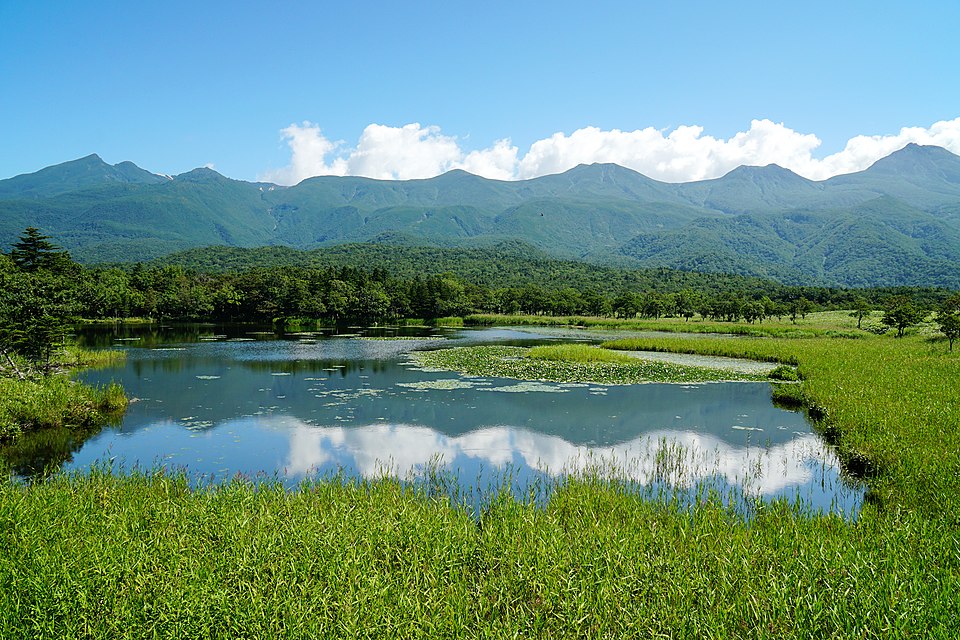
img: by 663highland

Before the region was known as Hokkaido, it was called Ezochi.
The land was largely untouched, covered in vast primeval forests. The indigenous Ainu people lived in harmony with nature, and only limited trading areas operated under the Matsumae Domain.
After the establishment of the Meiji government, Japan renamed the region Hokkaido for strategic and political reasons. The government aimed to strengthen national defense against Russian expansion and secure natural resources to support modernization.
In 1871, the government launched the Kaitakushi Ten-Year Development Plan, investing 10 million yen over a decade. At the time, Japan’s entire national budget was only about 50 million yen—making this an ambitious and historic project.
The Discovery of Wild Hops Changed Everything
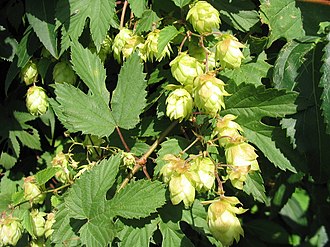
As the Kaitakushi explored new industries and built infrastructure, a crucial discovery was made in Iwanai Town: wild hops growing naturally in the area.
Hops are essential for beer, giving it both bitterness and aroma. Finding them growing in Hokkaido sparked a powerful realization—beer could be brewed locally. This discovery ignited serious plans for beer production and set the Sapporo Beer story in motion.
img: by Hagen Graebner

2. The Two Key Figures Behind Sapporo Beer
—Seibei Nakagawa and Hisanari Murahashi—
Behind the birth of Sapporo Beer lies the story of two passionate men whose determination made it possible.
Seibei Nakagawa

The first is Seibei Nakagawa, the first Japanese brewer to study beer brewing in Germany, the heartland of beer culture.
At just 17 years old, Nakagawa risked his life to stow away on a ship to England. He later traveled to Germany, where he met Shuzo Aoki, who would later become Japan’s Minister for Foreign Affairs. Impressed by Nakagawa’s drive and ambition, Aoki encouraged him to train as a beer brewer.
Nakagawa spent two years and two months in intense training at a brewery in Berlin. When he completed his apprenticeship, the local brewmaster left him with these words:
“We take great pleasure in having trained a capable and diligent young man from another country. It is hard for us to see him leave, but we sincerely wish him great success in the future.”
—Quoted from a museum caption, translated by the author
These words speak volumes about how sincerely and thoroughly Nakagawa mastered authentic German brewing techniques.
Hisanari Murahashi
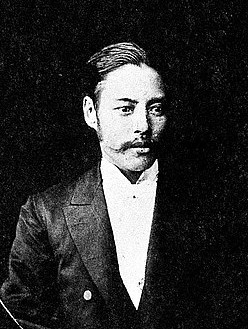
The second key figure is Hisanari Murahashi, a government official of the Kaitakushi (Hokkaido Development Commission).
Originally, the government planned to build the brewery in Tokyo. Murahashi strongly opposed the idea. Drawing on Nakagawa’s expertise, he argued that cool temperatures, high-quality ice, and abundant groundwater were essential to producing good beer. He persistently petitioned for the brewery to be built in Hokkaido instead.
Without Murahashi’s determination, the brewery might never have been established in Sapporo.
It is also said that when Murahashi hired Nakagawa, he imposed an extremely strict contract—Nakagawa was not allowed to quit, and any negligence would require him to return his entire salary. By today’s standards, this would clearly be unacceptable. At the time, however, it reflected Murahashi’s unwavering resolve to ensure the success of the beer project at all costs.
3. “Sapporo Beer” Completed Through Countless Challenges
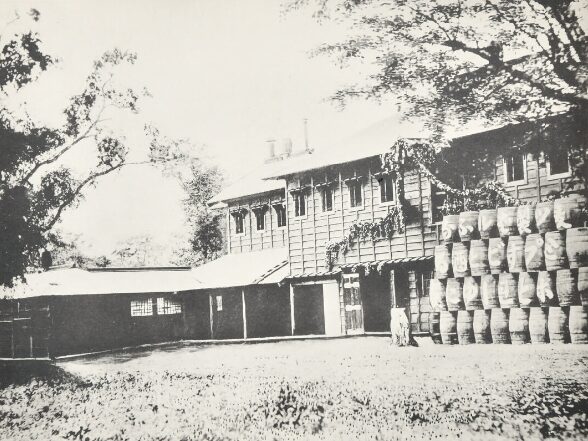
In 1876, the Kaitakushi Brewery, the predecessor of Sapporo Beer, was finally established in Sapporo.
From the very beginning, brewing beer was a series of challenges. At the time, refrigeration technology did not yet exist. Beer could only be cooled using natural ice harvested in winter. Unfortunately, that year brought an unusually warm winter.
As a result, low-temperature aging did not progress as planned, and yeast fermentation slowed down. One problem followed another.
Despite these setbacks, Nakagawa and his team never gave up. Their perseverance eventually paid off, and Japan’s first authentic lager beer was completed.
In 1877, the long-awaited “Cold Sapporo Beer” went on sale in Tokyo.
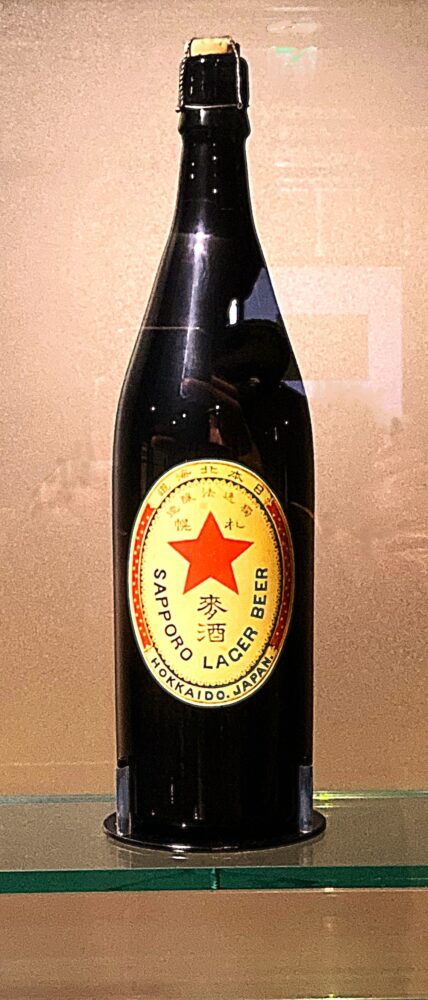
At the time, bottle mass production was still underdeveloped, so reused bottles from imported beer and wine were commonly used.
4. One Bottle Cost ¥5,000!? Beer as a Luxury Item
Beer in those days was an extreme luxury, incomparable to today.
Without electric refrigeration, beer had to be transported by ship along with large quantities of ice. Filtration technology was also still immature, and even a slight rise in temperature could restart fermentation and alter the flavor. Transporting beer was a constant battle against time and temperature.
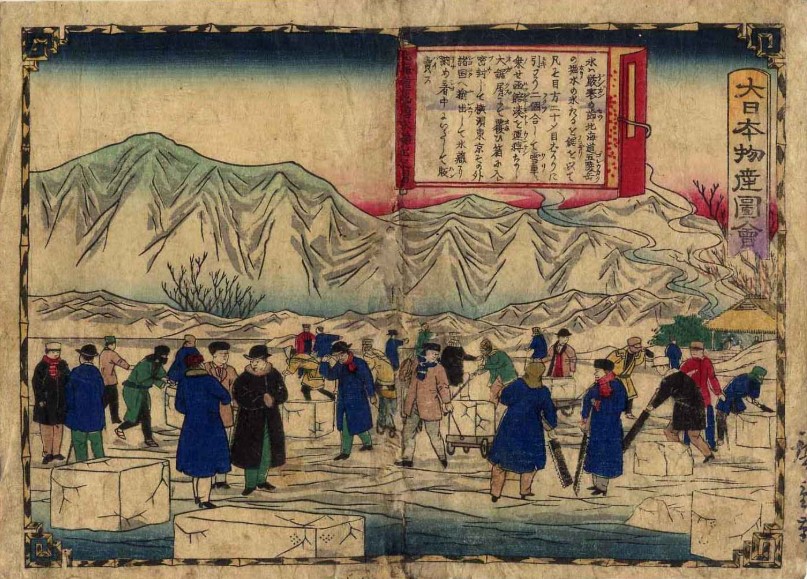
Utagawa Hiroshige III, Exporting Ice from Hakodate, Hokkaido (1877)
Collection of Sapporo Municipal Central Library
Price at the time: 16 sen per bottle
Modern equivalent: about ¥5,000 per bottle
Even at such a high price, the enormous costs of transportation and ice often resulted in losses. It was truly a national project driven by prestige rather than profit.
Today, even with liquor tax included, high-quality beer is widely available for just a few hundred yen. Realizing this makes us appreciate the technological advances and extraordinary efforts of the pioneers who made modern beer culture possible.
5. A “True” Taste Loved by Emperor Meiji
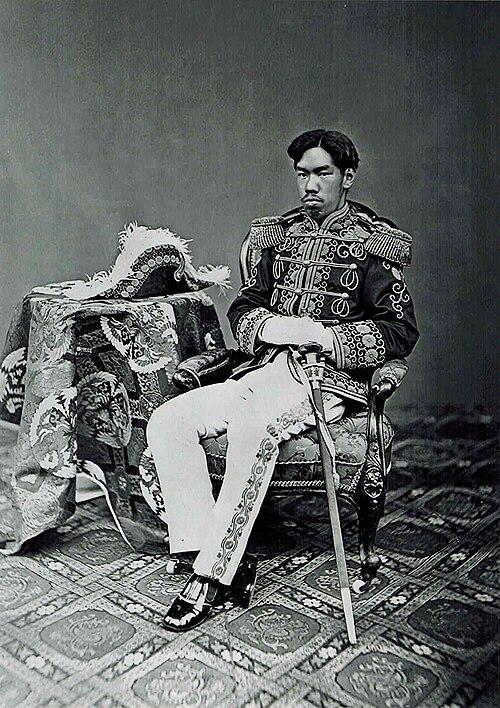
At first, Sapporo Beer was a luxury product—but its quality was unquestionably genuine.
Not only did foreign experts praise its flavor, but Emperor Meiji, who visited the brewery himself, was said to have enjoyed the beer so much that he asked for another glass.
In an era with limited technology and equipment, the beer created through passion and perseverance in northern Japan captivated everyone—from the nation’s highest authority to foreign professionals. This success laid the foundation for the Sapporo Beer we know today.
Museum Highlights: Must-See Exhibits
1. An Overwhelming Scale: The Giant Boiling Kettle
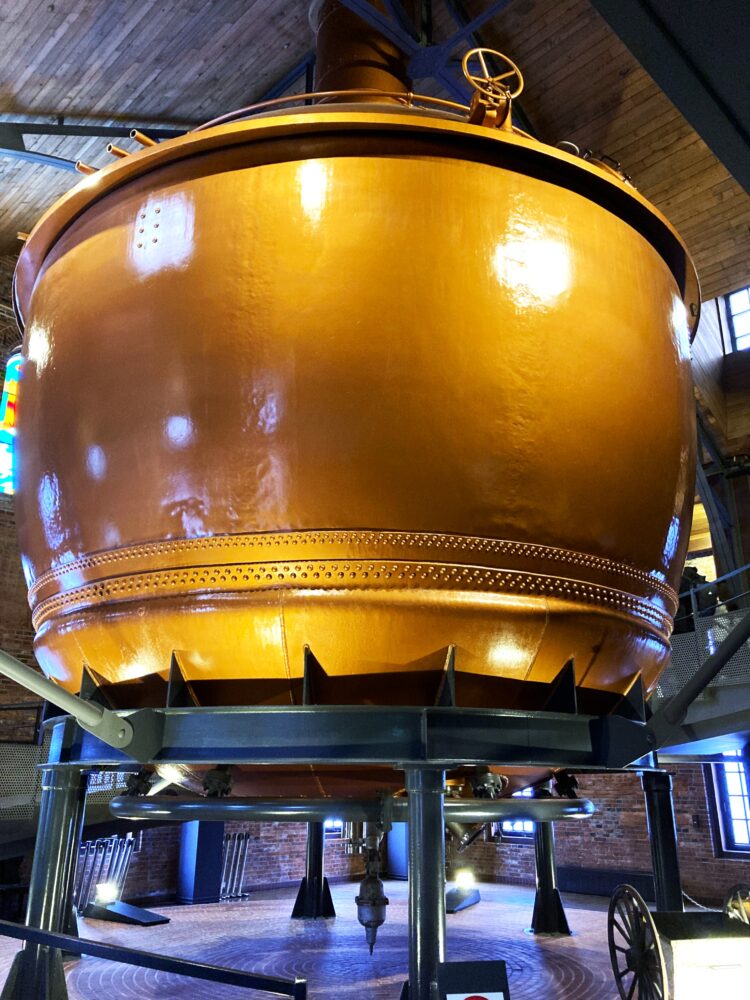
The most eye-catching exhibit in the museum is this giant boiling kettle, standing in the open atrium at the center of the building.
This is not a replica—it is the actual kettle that was used at the Sapporo Brewery until 2003, and its sheer size is truly overwhelming.
In this kettle, wort (unfermented beer) was boiled and hops were added—an essential step that creates beer’s defining bitterness and aroma.
- Height: approx. 10 meters
- Capacity: 85 kiloliters
That volume equals about 240,000 cans of beer (350 ml each).
Even if you drank one can every single day, it would take more than 650 years to finish it all.
It is a powerful symbol, perfectly fitting for what feels like a true temple of beer.
2. Advertising Through the Ages: The Poster Collection
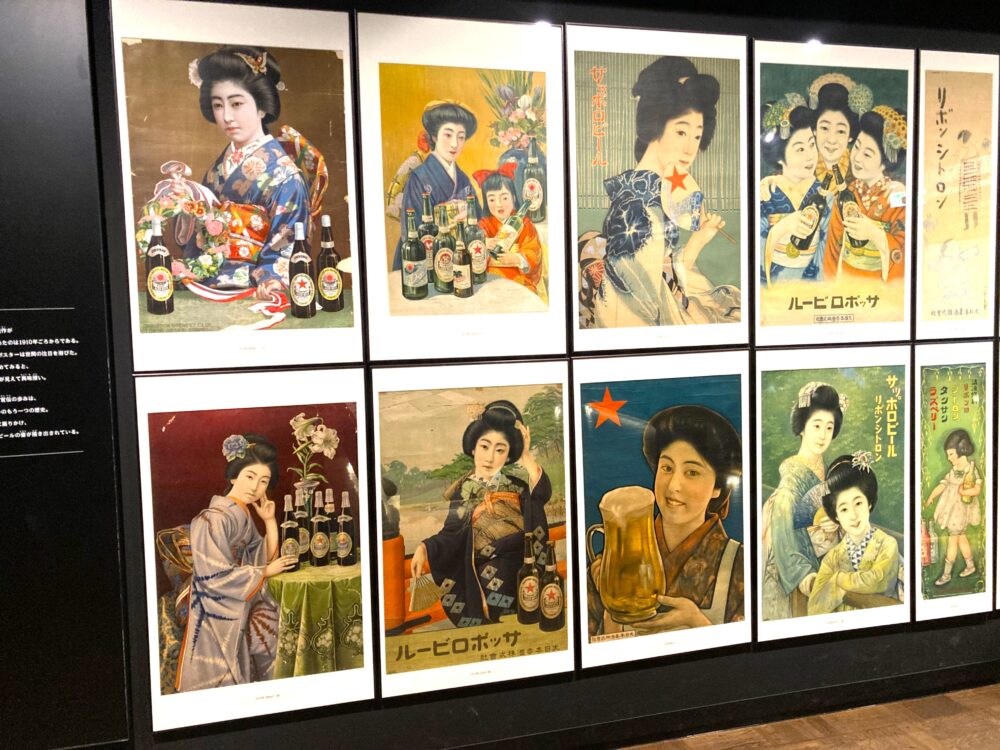
Another highlight of the museum is the collection of historical advertising posters.
When you look at posters from around 1910 (the late Meiji to Taisho period), an interesting shift becomes clear. Until just a few decades earlier, flat, ukiyo-e–style designs were common. Around this time, however, poster art changed dramatically, adopting a more three-dimensional and colorful style influenced by Western painting.
These posters clearly show how beer, as a new cultural product, helped modernize Japanese art, design, and everyday life. A single poster can tell a surprisingly rich story.
3. What Does “Hop Aroma” Really Smell Like?
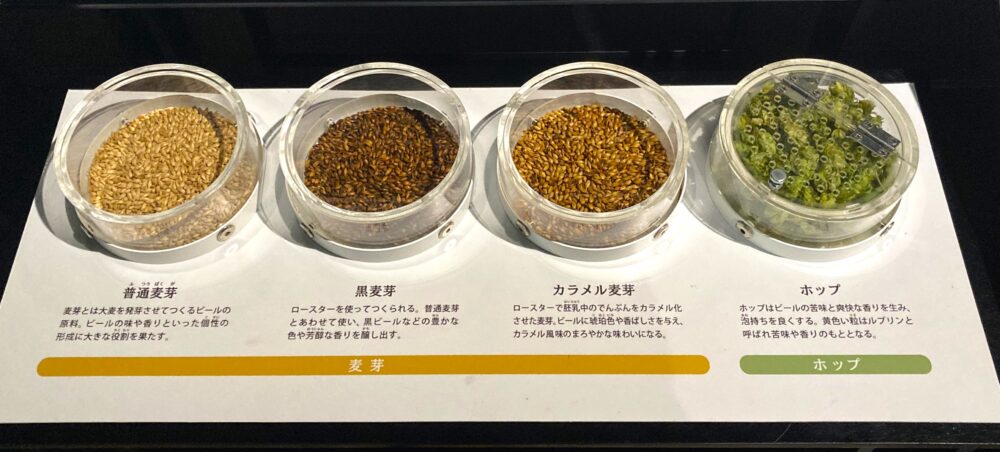
When it comes to beer, the three essential elements are foam, aroma, and bitterness—and hops play a key role in all of them.
Inside the museum, there is an interactive corner where visitors can actually smell dried hops.
I highly recommend trying it—though I have to admit, to me it smelled a bit like the bottom of a foot (sorry!).
Pro Tips: The Magic of the “Three-Pour Method” That Transforms Your Beer
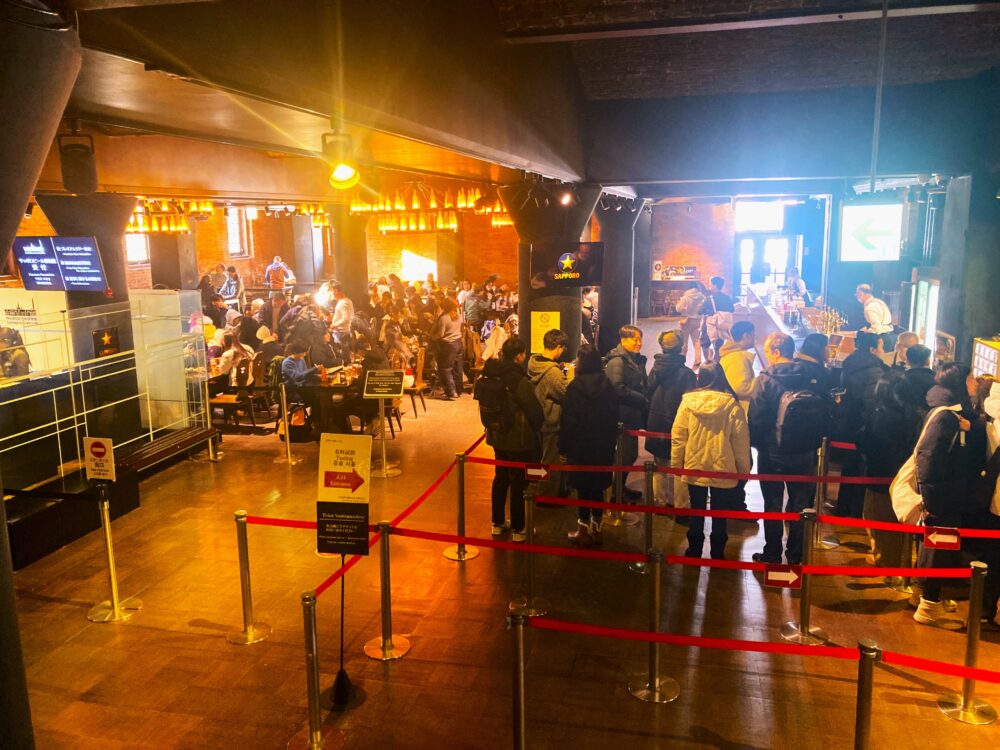
At the end of the tour, during the tasting session in the 1st-floor Star Hall, the guide demonstrates the famous “three-pour method”—a technique that dramatically improves the taste of beer.
Once you learn this method, you can recreate a bar-quality beer experience at home.
Let’s walk through these golden steps.
Preparation: Set the Stage for the Perfect Pour
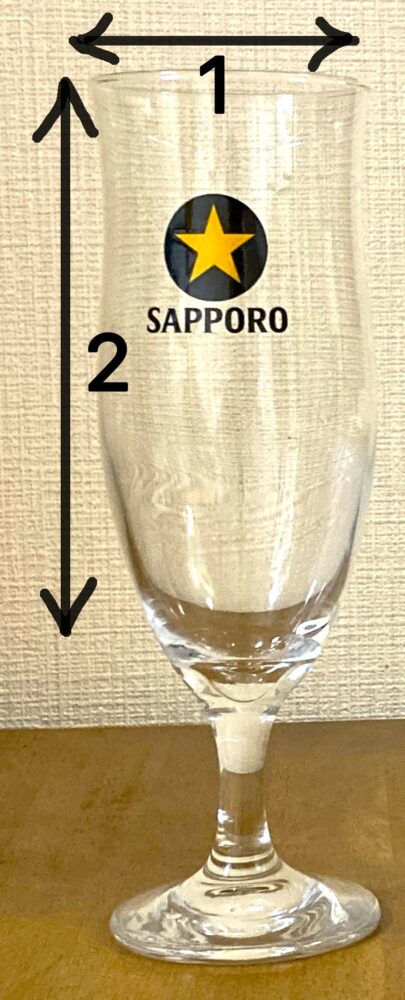
Choose the right glass
A glass with a rim-to-height ratio of about 1:2 is ideal.
Chill properly
The beer should be well chilled (the guide recommends 5–6 hours in the refrigerator).
Do not freeze the glass. Frost can dilute the flavor and damage the foam. Instead, chill the glass slowly in the refrigerator for best results.
Step 1: Pour Boldly and Create Plenty of Foam
This may sound surprising, but the first pour is intentionally aggressive.
Pour from a slightly higher position and fill about 60–70% of the glass with foam.
This thick foam acts as a protective “lid,” preventing oxidation and preserving the beer’s freshness.
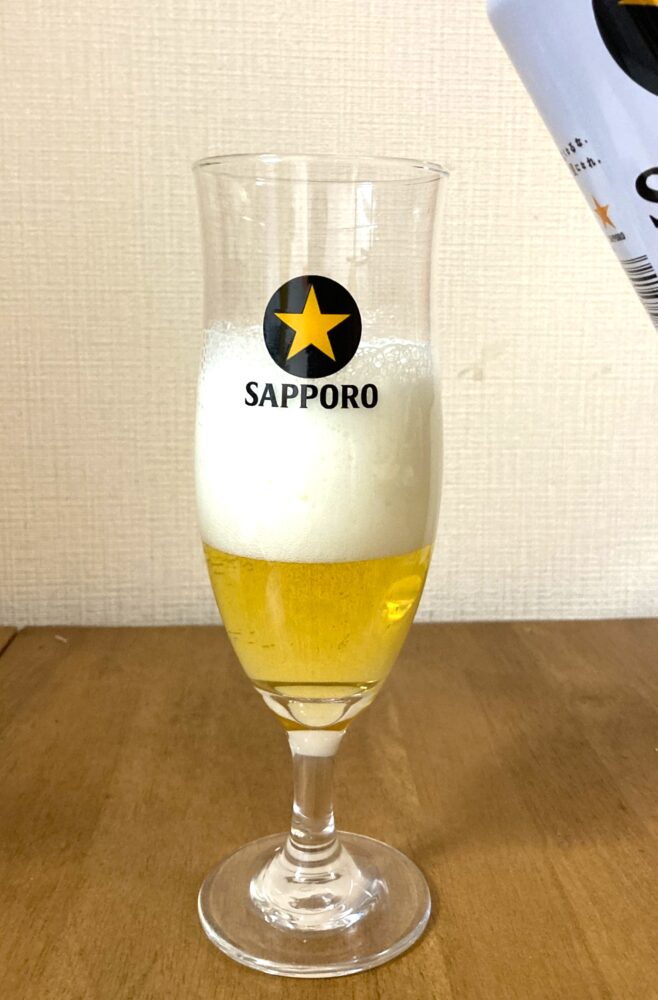
Step 2: Continue Pouring Slowly
After waiting briefly, the liquid settles and the ratio of beer to foam becomes 1:1.
At this point, pour slowly and gently. Stop when the glass is about 90% full.

Step 3: Build the Foam to the Golden Ratio
Finally, carefully build up the foam to finish the pour.
Thanks to surface tension, the foam can rise above the rim without spilling, so don’t be afraid to make it nice and tall.
When the ratio of beer to foam reaches the golden 7:3 balance, it’s perfect.
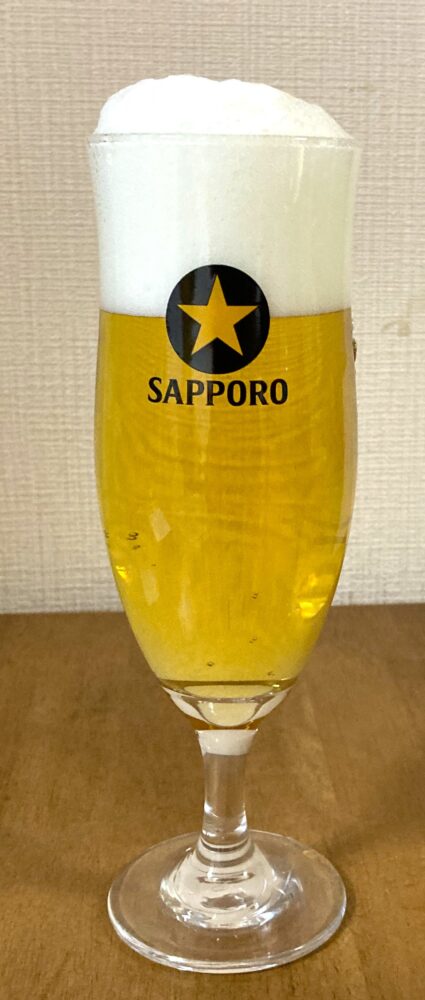
A Dramatic Difference in Taste and Smoothness
When compared side by side with a standard one-pour beer, the three-pour version is noticeably creamier and smoother on the palate.
Excess carbonation is gently released, making the beer easier on the stomach and enjoyable all the way to the last sip. The foam also traps aroma, keeping the fragrance rich and vibrant.
If you enjoy savoring beer slowly and appreciating its aroma, this method is highly recommended.
Final Thoughts: Savoring the “Frontier Spirit” in Every Glass
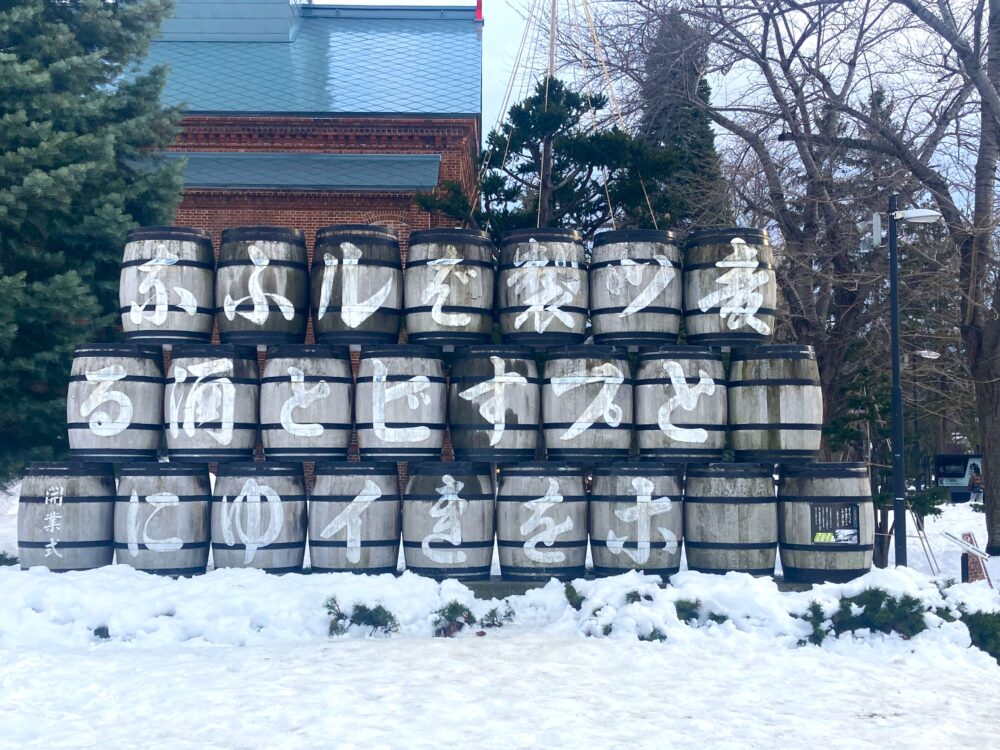
In front of the Sapporo Beer Museum stands a stack of large barrels engraved with the powerful words:
“From barley and hops, beer is born.”
This scene recreates a moment captured in a commemorative photograph from 1876, the year the brewery opened. Today, it serves as a symbolic landmark of the museum.
Clearing vast forests and building beer from nothing, pioneers like Seibei Nakagawa and Hisanari Murahashi must have faced struggles and doubts far beyond what we can imagine today. What drove them forward was an unwavering determination to deliver something genuine.
The words carved into the barrels sound almost like a proud declaration of victory—the moment when, after countless hardships, the very first drop of beer was finally born.
Today, we can enjoy high-quality beer as part of everyday life. To truly appreciate that simple pleasure, why not visit Sapporo and discover the remarkable story behind it?
Here’s a toast to the passion of those pioneers.
At the Sapporo Beer Museum, may you find a special glass that’s uniquely yours.
Visitor Information: Sapporo Beer Museum
Location: 1-1 Kita 7-jo Higashi 9-chome, Higashi Ward, Sapporo, Hokkaido, Japan
Comments