

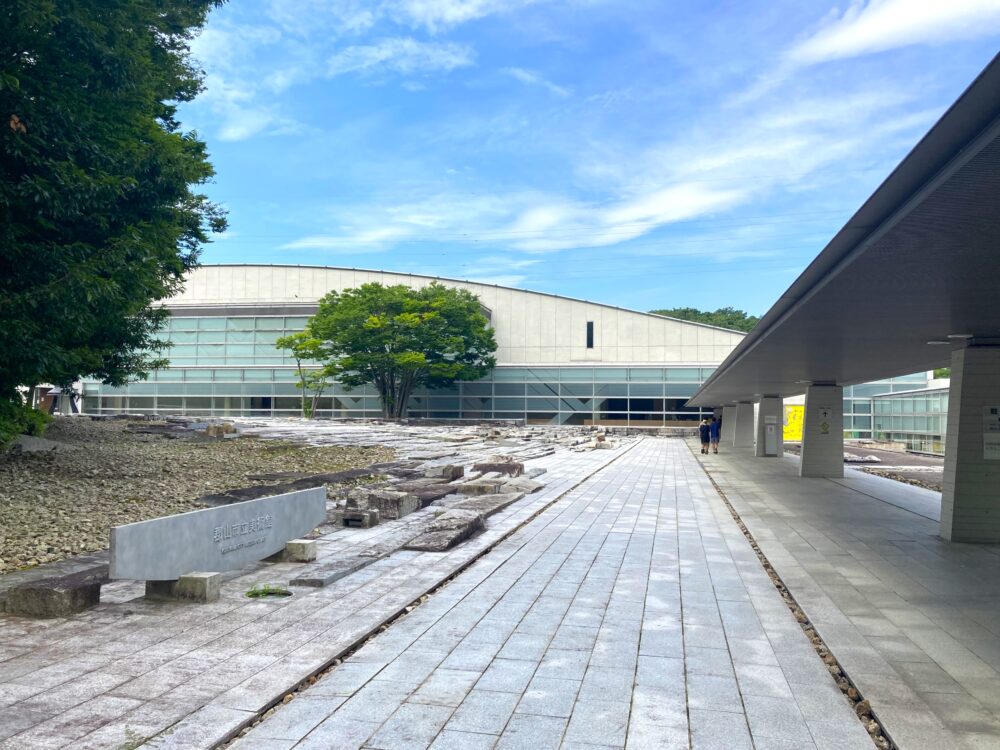
See Masterpieces of Modern British Art in Koriyama
Opened in 1992, the Koriyama City Museum of Art is known for its impressive collection of modern British art.
Here, you can enjoy landscape paintings by John Constable, works by Edward Burne-Jones of the Pre-Raphaelites, and pieces by Frank Brangwyn, also famous for his connection to the Matsukata Collection.
In Japan, many museums focus on the Impressionists or the École de Paris, but a museum dedicated to British art is truly rare.
If you’re interested in British paintings, this museum in Koriyama is absolutely worth the trip.
A Relaxing Museum Perfect for a Slow Weekend
The building was designed by architect Takahiko Yanagisawa, who also worked on the Museum of Contemporary Art Tokyo.
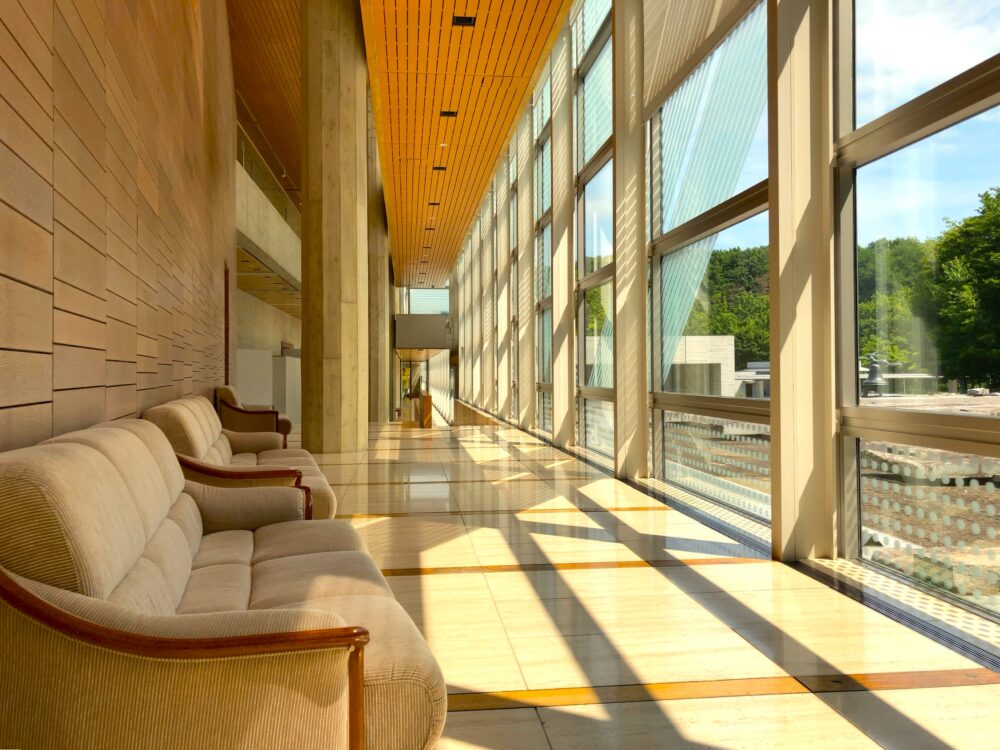
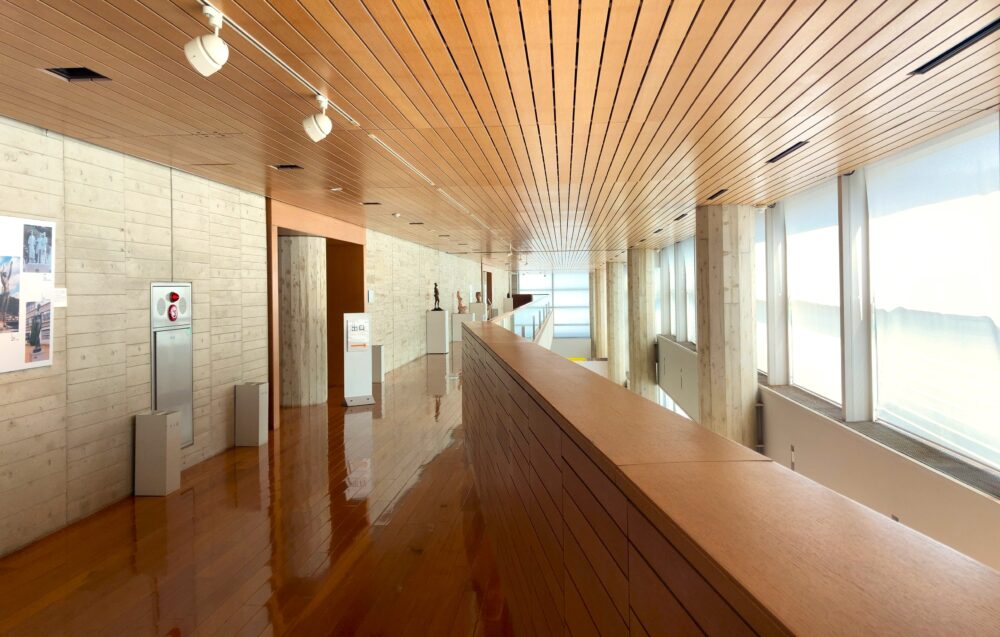
From the entrance, a 100-meter open hallway stretches into the building, creating a bright, airy space that feels almost like a gentle breeze is flowing through it.
The modern concrete design is softened with warm wooden details, giving the museum a calm and welcoming atmosphere.
The glass-fronted entrance area looks out onto the garden, and sitting on the sofa there is so relaxing that you might lose track of time.
Highlights from the Collection
When people think of the Koriyama City Museum of Art, the first thing that comes to mind is its outstanding collection of modern British art.
Here are some of the must-see works you won’t want to miss.
Please note: These artworks are part of the permanent collection, but the display changes regularly. Be sure to check the museum’s official website before your visit for the latest information.
Edward Burne-Jones
“Flora” (1868–1884)

About This Work (Tap or Click to View)
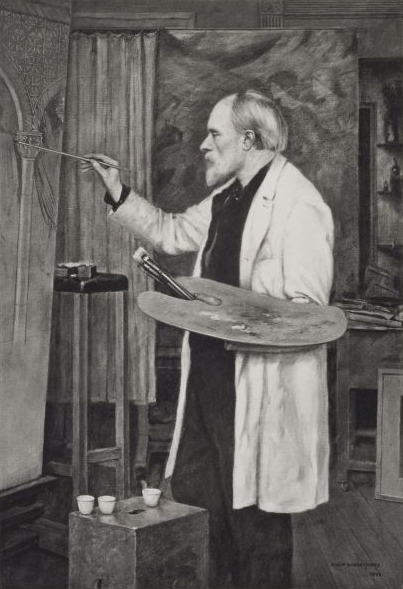
Edward Burne-Jones (1833–1898) was one of the leading artists of the Pre-Raphaelite movement in Britain.
This painting depicts Flora, the Roman goddess of flowers and spring.
Although she may not be very familiar, Flora has long been a favorite subject for Western masters such as Botticelli and Titian. As the goddess of abundance, she is often shown surrounded by flowers, plants, and lush greenery.
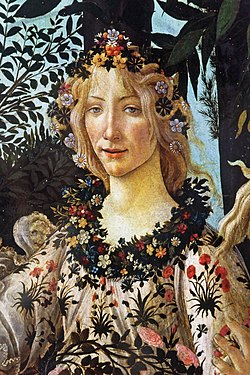
In Burne-Jones’s Flora, the goddess is shown in a graceful pose, scattering seeds as if quietly announcing the arrival of spring.
While Burne-Jones is often grouped with Symbolist artists, he was less concerned with moral or mythological lessons and more interested in creating a world of beautiful, dreamlike imagery. Using the figure of Flora, he builds a perfectly composed fantasy: her flowing posture, the motion of her hand releasing seeds, and the enclosed garden that seems to exist outside of reality.
You don’t need any deep knowledge of mythology to enjoy this painting.
Simply take in its stillness, its atmosphere, and the quiet beauty—this is the magic of Burne-Jones.
If you visit the Koriyama City Museum of Art, be sure to spend a moment with Flora and experience its unique dreamlike world.
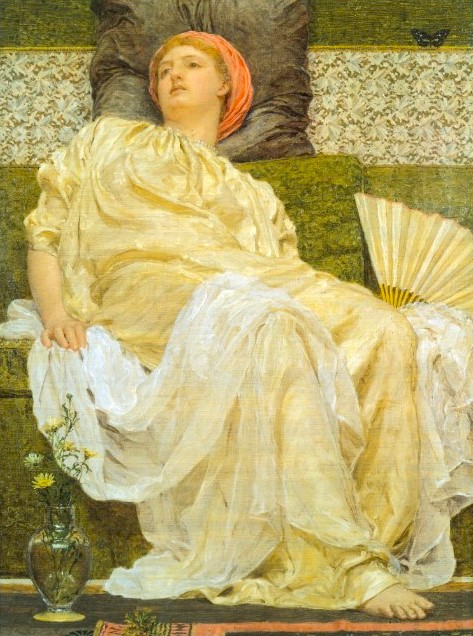
Albert Moore
“Yellow Marguerites” (1881)
About This Work (Tap or Click to View)
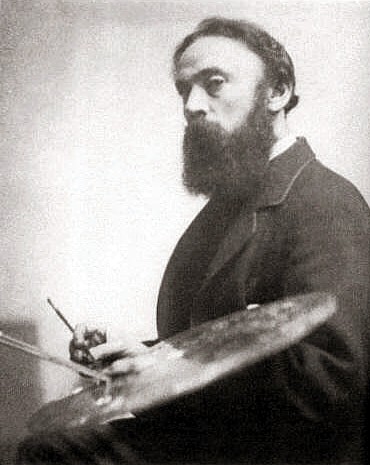
Albert Moore was a key painter of the Aesthetic Movement in Britain, known for his serene, graceful figures that often resemble classical Greek sculpture. Many of his works feature a distinctive “upward-looking” viewpoint. By painting the figure from a slightly lower angle, he gives the model a strong, almost monumental presence—while still maintaining an incredibly delicate touch in his brushwork. The folds of fabric, the edges of petals, even the texture of a fingertip feel almost tangible.
Although Yellow Marguerites is not a large painting, Moore’s mastery of composition shines beautifully here.
The woman at the center has a dreamy, faraway expression, creating an atmosphere of quiet, almost divine calm. Her outfit—painted in soft creams and pale yellows—harmonizes perfectly with the flowers and small objects around her. This refined color sense likely reflects Moore’s early experience designing wallpaper and stained glass.
Moore was one of the leading artists of Aestheticism, a movement that valued “beauty itself” above story or moral meaning. He removed all narrative elements and captured viewers with pure shape, color, and rhythm. You can see this clearly in the flowing lines of the drapery and the decorative patterns that run throughout the painting. Everything resonates gently together, creating a soothing, almost meditative visual experience.
Moore’s pursuit of refined, balanced beauty is unforgettable when seen in person.
If you visit the Koriyama City Museum of Art, take your time with Yellow Marguerites and enjoy the quiet elegance of his world.
Dante Gabriel Rossetti
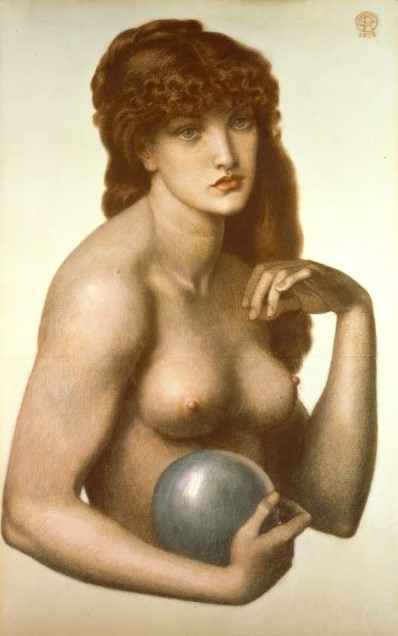
“Madonna Pietra” (1874)
About This Work (Tap or Click to View)
The Pre-Raphaelites: A Rebellion Against “Academic” Art
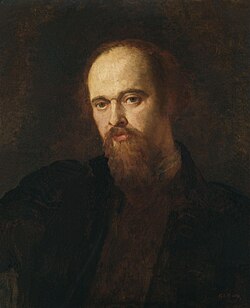
Dante Gabriel Rossetti, like Edward Burne-Jones, was a central member of the Pre-Raphaelite Brotherhood, founded in 1848.
Despite the name, the group was not inspired by Raphael. In fact, they rejected the “Raphaelite” academic style that dominated European art at the time—grand poses, idealized figures, and predictable compositions.
They saw these conventions as artificial and untruthful.
Instead, they looked back to early Renaissance artists such as Botticelli and Jan van Eyck, who painted with simple, honest detail and vivid color. For the Pre-Raphaelites, true art should imitate nature directly, capturing its richness with sharp, meticulous attention.
In other words, they were not honoring Raphael—they were rejecting the overly polished tradition that followed him.
Rossetti’s Love of Myth and Literature
Rossetti helped found the movement, and his works—and their instantly recognizable figures—are full of rich colors and emotional intensity.
Madonna Pietra is a great example.
The woman’s elongated face, strong features, and slightly melancholic expression are all trademarks of Rossetti’s style.
The word “Pietra” means “stone” in Italian. The character comes from a poem by Dante Alighieri, in which the lady is described as having a heart “as cold as stone.” Rossetti created this pastel as a study based on that literary figure. Although he intended to develop it into a finished painting, the final version was never completed.
This artwork reminds us of something important:
The Pre-Raphaelites rejected Raphael’s style, not mythological or literary themes themselves. They embraced stories from poetry, legends, and classical literature—something that later influenced the rise of Symbolism in European art.
John Constable
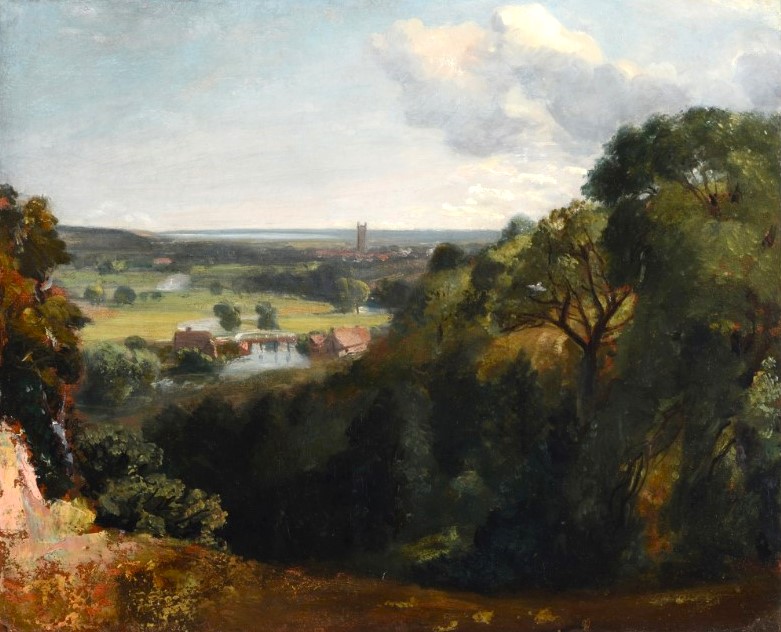
“Dedham Vale” (1802)
About This Work (Tap or Click to View)
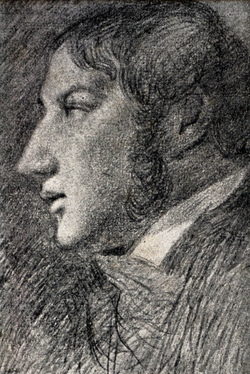
John Constable, one of Britain’s greatest landscape painters, is also represented in the Koriyama City Museum of Art’s collection.
“Dedham” refers to a village in Essex, in eastern England, and it was Constable’s hometown.
The church tower visible near the horizon still stands today. Constable attended a school located just east of this church—another building that still survives.
Because of this personal connection, Dedham Vale is filled with a sense of nostalgia. Constable returned to this exact viewpoint many times throughout his career, painting the landscape again and again.
For him, this was far more than a simple countryside view—it was a deeply meaningful image of home.
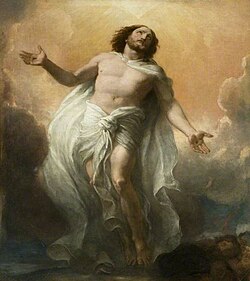
Although Constable is famous for his landscapes, he also created a few religious paintings.
One of these works, The Ascension (1821–1822), is housed in Dedham’s parish church—the same church seen in Dedham Vale.
Charles Wirgman
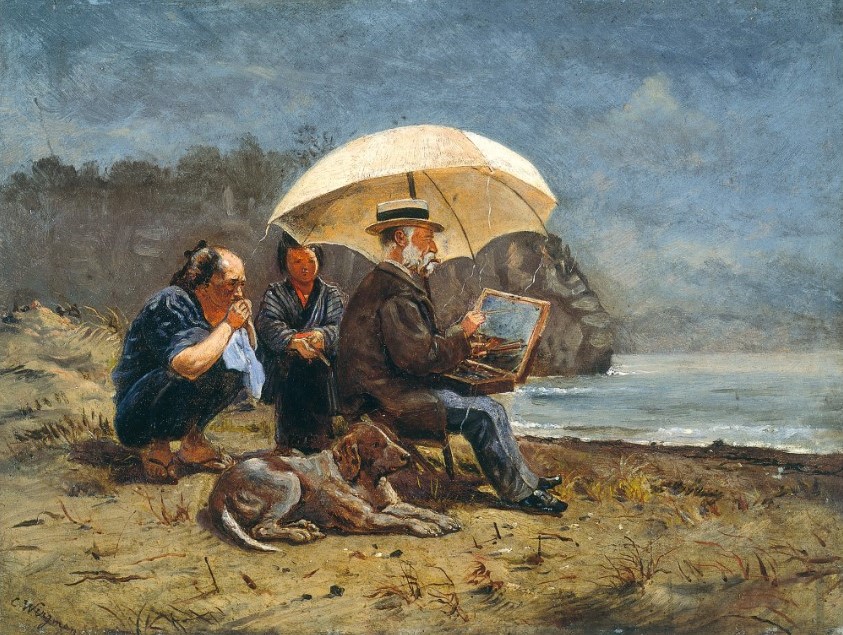
“A Western Gentleman Seated under an Umbrella on a Beach with his Dog, Painting with a Japanese Man and Child by his Side” (1870s)
About This Work (Tap or Click to View)

An Unusual Artist Who Recorded Japan’s Turbulent Transition
Charles Wirgman was a British painter and journalist who came to Japan during the final years of the Edo period.
His life in Japan coincided directly with one of the most dramatic transitional eras in Japanese history. After arriving, he worked as a correspondent for the Illustrated London News, documenting major events such as the Namamugi Incident and the Anglo-Satsuma War. Through his artworks and illustrated reports, he conveyed Japan’s rapidly changing society to readers in Britain.
Wirgman also played a crucial role in the development of modern Western-style painting in Japan.
He taught many pioneering Japanese artists—including Yuichi Takahashi and Yoshimatsu Goseda—and is recognized today as a key figure in the early history of yōga (Western-style painting) in Japan.
Sketch Journalism: Reporting at the Risk of His Life
What made Wirgman truly remarkable was his speed.
At a time when photography was still limited, hand-drawn illustrations were the fastest way to deliver vivid news from distant places. In this sense, Wirgman functioned less as a traditional painter and more as a journalist who reported through sketches.
One famous example of his journalist spirit comes from the Tōzenji Incident of 1861.
When Japanese anti-foreign activists attacked the British legation, Wirgman hid under the building and sketched the scene as it unfolded. He later sent this illustration to Britain, where it was published in the Illustrated London News.
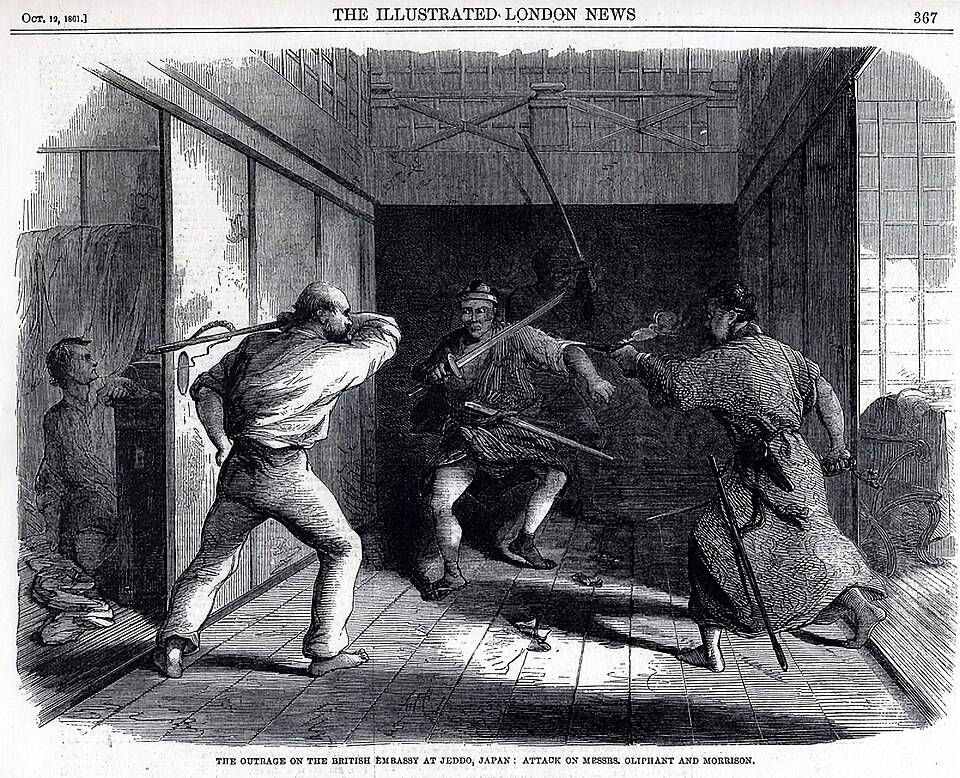
Published in the Illustrated London News on October 12, 1861
A Peaceful Scene After Japan Opened to the World
“A Western Gentleman Seated under an Umbrella on a Beach with his Dog, Painting with a Japanese Man and Child by his Side” was created in the early Meiji period, after Japan had opened its ports.
Although the danger of political violence had eased, foreign residents still faced social restrictions and prejudice. Yet the scene in this painting is warm and harmonious: a Western gentleman—likely Wirgman himself—is sketching outdoors, while Japanese men and women watch with interest and kindness.
It is hard to imagine Wirgman inventing such a scene out of pure fantasy.
As a journalist, he would have been attentive to reality. The painting likely reflects the friendly private interactions he experienced with local people—moments of calm and creativity that existed alongside his dangerous reporting work.
The result is a gentle, heartwarming depiction of everyday life, capturing the sense of fulfillment Wirgman found through both art and cross-cultural exchange.
Frank Brangwyn
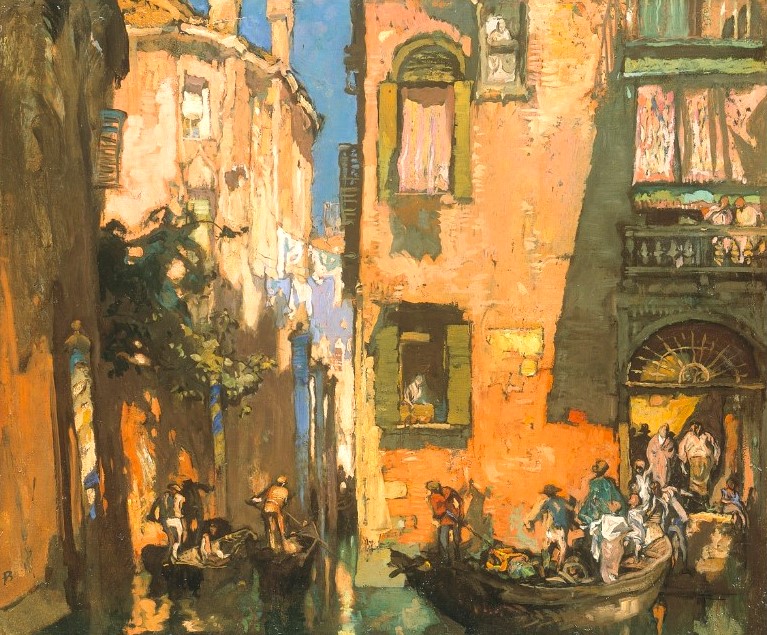
“A Bye Canal, Venice” (1924)
About This Work (Tap or Click to View)
A Multi-Talented Artist of the Early 20th Century
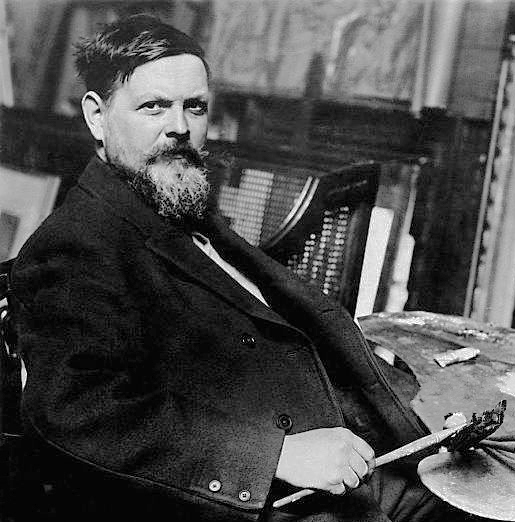
Frank Brangwyn was a Belgian-born British artist known for his remarkable versatility.
He worked far beyond the boundaries of traditional painting, producing oil paintings, prints, posters, furniture, stained glass, and even architectural designs. He was truly a multi-disciplinary creator who left a strong mark on early 20th-century art and design.
Brangwyn also had close ties with the Japanese industrialist Kojiro Matsukata and played a key role in helping develop the “Matsukata Collection,” which later became the foundation of the National Museum of Western Art in Tokyo.
Bold Brushwork and the Colors of the Sun
One of Brangwyn’s greatest strengths is his unforgettable use of bold, vivid color.
His sense of color was shaped by his father, who worked in church decoration; by his training at the Morris workshop; and by his own travels.
In his youth, Brangwyn worked as a seaman to fund his journeys, traveling through Morocco, Egypt, Turkey, and other regions of the Orient. The intense sunlight and rich cultural colors he encountered there left a deep, lasting impression on his artistic style.
Venice Through an Oriental Light
This influence is clearly visible in A Bye Canal, Venice.
The painting captures the iconic waterways of Venice, but Brangwyn transforms the scene with dramatic contrasts of sunlight and shadow. The buildings along the canal are painted in glowing, fiery oranges—colors far stronger than those seen in everyday life, creating a powerful visual impact.
Although the subject is unmistakably Venice, the decorative, saturated colors give the work an almost Oriental atmosphere, reflecting the cultures Brangwyn admired during his travels. At the same time, the solid forms and strong composition convey a firm sense of reality.
The result is a vivid, energetic landscape filled with Brangwyn’s passion and fascination for distant cultures—one of his most characteristic and compelling works.
C.R.W. Nevinson
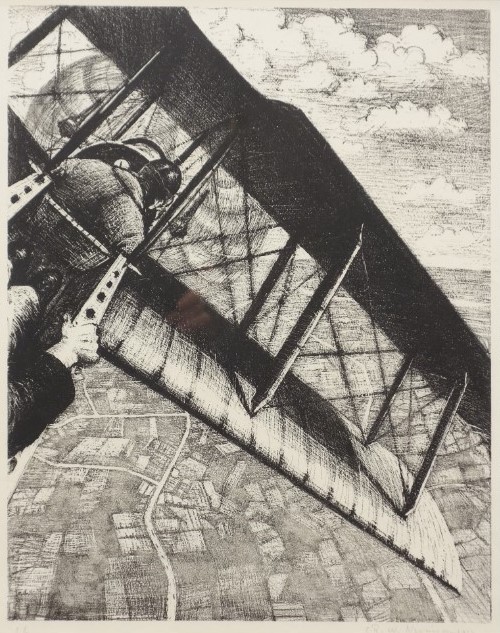
“Banking at 4000 Feet” (1917)
About This Work (Tap or Click to View)
A Leading Modernist Who Captured the Skies of World War I
Christopher Richard Wynne Nevinson is one of Britain’s most famous war artists, especially known for his powerful images of World War I.
He first gained wide recognition after exhibiting works based on his own wartime experiences.
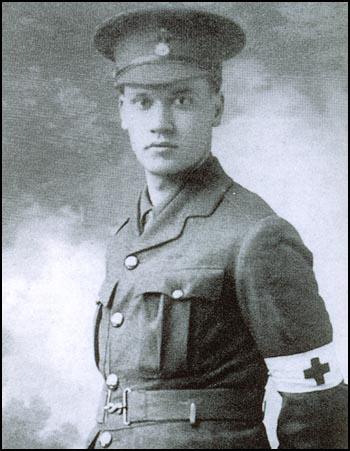
During the war, Nevinson volunteered with the Friends’ Ambulance Unit (FAU), serving as an ambulance driver and performing other duties. Drawing from these experiences, he created works such as Machine Gun in 1916. The piece’s intense depiction drew strong praise, and in March 1917 Nevinson was appointed an official war artist by the British War Propaganda Bureau.
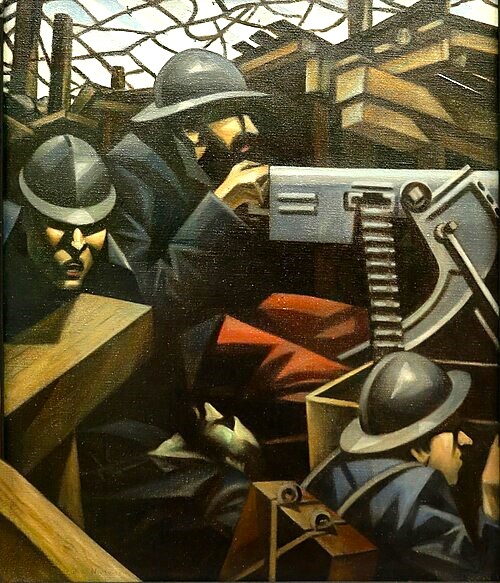
img:by Sailko

Capturing the Extreme Visual Experience of Flight
As an official war artist, Nevinson was given permission to join reconnaissance flights with the Royal Flying Corps on the Western Front.
These life-threatening missions inspired Banking at 4000 Feet.
The work also shows Nevinson’s signature Futurist style.
The layered, geometric planes of the aircraft, its shadows, and the patchwork of roads and fields below create a dynamic, almost abstract composition.
Seen from the perspective of the person inside the aircraft, the dramatic banked turn conveys speed, tension, and the disorienting thrill of flight.
These energetic elements reflect the Futurist celebration of machines and velocity, an idea that strongly influenced Nevinson before the war.
A Work Born from Pure Curiosity
While many of Nevinson’s works depict the brutal realities of war, this print is surprisingly free from dark, tragic imagery.
Instead, it shows the excitement of witnessing an enormous landscape from the air for the first time.
The tilted horizon, visible as the plane turns sharply, must have been a striking sight to the young artist.
In this sense, Banking at 4000 Feet can be seen not merely as a war image, but as a work created from a young man’s deep curiosity and amazement at a new, aerial world.
Conclusion: The Essence of British Painting at the Koriyama City Museum of Art
We hope you enjoyed this introduction to British painting at the Koriyama City Museum of Art.
The museum’s collection includes outstanding works from key moments in British art history:
masterpieces by Edward Burne-Jones and Dante Gabriel Rossetti of the Pre-Raphaelite movement, elegant Aesthetic paintings by Albert Moore, and works by Charles Wirgman, who played an important role in Japan during the late Edo period and helped lay the foundations of Western-style painting in the country.
It is extremely rare in Japan to find a museum that focuses so deeply on British art while maintaining such a high level of quality. This makes the Koriyama City Museum of Art truly special.
The museum building itself is another highlight. The glass-fronted entrance fills the space with natural light, creating a warm and comfortable atmosphere for viewing art. After exploring the galleries, it’s a pleasure to relax inside the museum, enjoy a drink, and reflect on what you’ve seen.
If you have the chance, we highly recommend visiting the Koriyama City Museum of Art and discovering the rich world of British painting for yourself.
Koriyama City Museum of Art – Visitor Information
Location:130-2 Oyachi, Yasuhara-machi, Koriyama City, Fukushima Prefecture, Japan
Comments